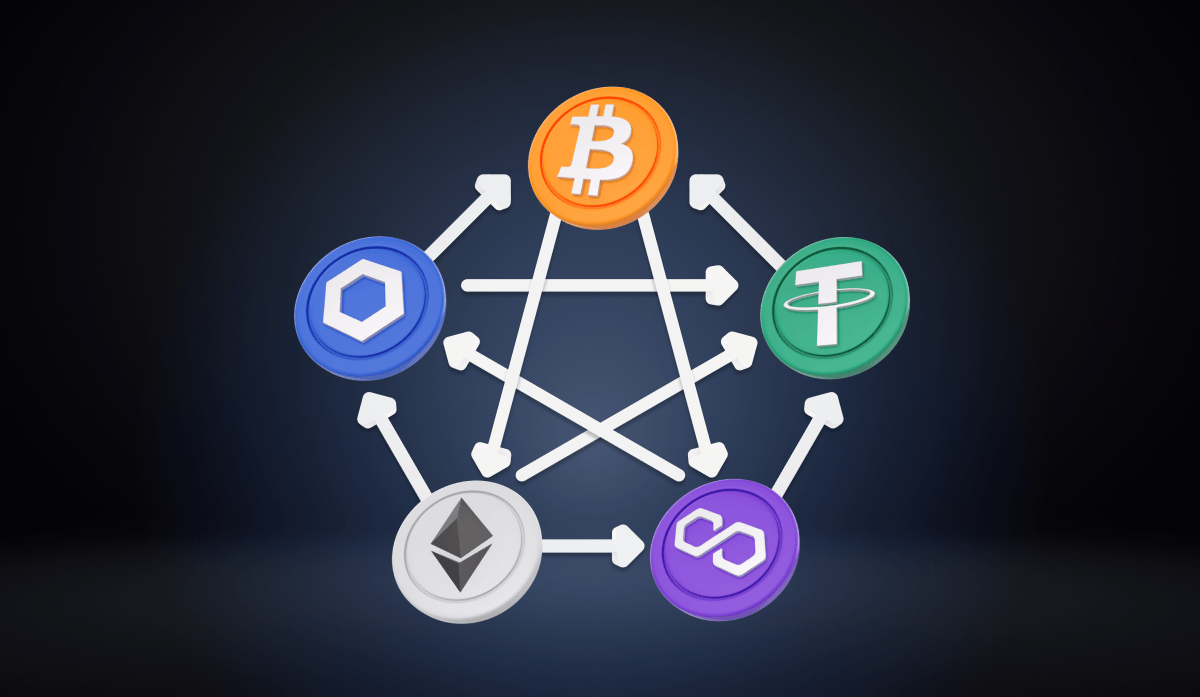
Modern digital technologies are developing rapidly, opening up new opportunities for managing finance and investments. One of the key innovations of recent years is the Web3 concept—this is a new generation of the internet based on the principles of decentralization, transparency, and user control over their own data. A central component of Web3 is decentralized exchanges (DEX), which allow cryptocurrencies to be swapped directly between users without intermediaries.
SWT has developed a modern crypto wallet that includes tools for convenient storage, management, and exchange of digital assets. Decentralized exchanges (DEX)—Uniswap and PancakeSwap—are integrated into the SWT Wallet interface, giving users access to secure and convenient financial operations within a single platform that reflects the spirit of the decentralized Web3 era.
What is Web3 and why does it matter for wallets?
Web3 is a new era in the evolution of the internet, where blockchain technologies and decentralization play the key role. If Web1 was static and Web2 made the internet interactive and social, then Web3 enables users to control their own digital assets and data themselves, rather than relying on centralized services.
In the crypto world, Web3 is crucial because it provides tools for more independent, secure, and private financial management. One such tool is the modern crypto wallet, which gained new capabilities with Web3. Web3 wallets work directly with blockchains, allowing users to store, send, and swap cryptocurrencies themselves, as well as interact with decentralized applications (dApps). This approach makes the user the full owner of their funds, since private keys are stored only by the user and are not handed over to third parties.
How DEXs work and their advantages
Decentralized exchanges, or DEXs, are platforms for exchanging cryptocurrencies that operate without centralized intermediaries. Unlike traditional exchanges, DEXs are built on smart contracts and blockchain, enabling peer‑to‑peer trades directly between users.
The core operating principle of DEXs is the use of smart contracts—autonomous programs that automatically execute deal terms once predefined conditions are met. A user connects their crypto wallet to a DEX and can swap tokens without depositing them to an exchange account. The swap occurs on‑chain, while the smart contract secures the transaction.
Key advantages:
- One of the main advantages of DEXs over centralized exchanges is that there is no need to entrust your funds to a third party. Secret keys and assets remain under the user’s control at all times.
- One of the main advantages of DEXs over centralized exchanges is that there is no need to entrust your funds to a third party. Secret keys and assets remain under the user’s control at all times.
- In addition, DEXs are often not limited geographically, do not require approval or registration, and are available 24/7. This makes them attractive to people across different countries and regions.
Features of DEX integration in the SWT Wallet
Integrating a DEX directly inside the SWT crypto wallet is a modern solution that lets users swap digital assets without leaving the wallet interface. This integration makes SWT not just a place to store funds, but a full‑fledged platform for managing a crypto portfolio.
In the SWT Wallet, the decentralized exchange works by implementing swap protocols that support P2P transactions (for example, via smart contracts and atomic swaps). Token swaps are possible right in the app—the user selects the desired currencies, sets the amount, and confirms the exchange. The entire operation takes place on the blockchain, without third parties or moving funds to an external service. This minimizes the risk of losing control over funds and eliminates the need to register on external platforms. All this simplifies the swap process and makes it intuitive. Users don’t need to switch between services—everything is available in one app with a clear interface. Transparent rates, operation history, and instant crediting to the wallet are supported. Together, this delivers convenience, independence, and reliable protection of data and assets for any exchange inside the SWT Wallet.
Advantages of using a DEX in the SWT Wallet
Using a DEX in the SWT Wallet has a number of obvious advantages:
- First, operations are extremely simple: you can complete an asset swap in just a few clicks without leaving the familiar app interface. There’s no need to deal with additional services, enter complex data, or switch between wallets—everything is fast and straightforward.
- First, operations are extremely simple: you can complete an asset swap in just a few clicks without leaving the familiar app interface. There’s no need to deal with additional services, enter complex data, or switch between wallets—everything is fast and straightforward.
- In addition, funds are not stored with third parties—only the owner has access to them—and the smart‑contract mechanism automatically ensures the fairness and transparency of every deal.
Step‑by‑step description of a crypto swap inside the SWT Wallet
The process of swapping cryptocurrency inside the SWT Wallet via a DEX is designed to be as simple, fast, and secure as possible for the user.
Here is how it works, step by step:
- First, the user selects which cryptocurrency they want to swap and for which one. In the SWT Wallet interface, specify both assets and, if needed, the desired amount.
- The system automatically selects the best available swap offers; the rate calculation and preliminary fee are shown immediately.
- Next, the user confirms the operation after carefully checking the details (amount, rate, and final amount to receive).
- After confirmation, a transaction is formed and signed with the private key, which always remains only with the user.
- After confirmation, a transaction is formed and signed with the private key, which always remains only with the user.
- After confirmation, a transaction is formed and signed with the private key, which always remains only with the user.
The entire process usually takes from a few seconds to a few minutes, depending on network load and token type, and your funds remain under your full control at all times—you do not hand them to third‑party services and do not risk losing them due to hacks of centralized platforms.
Tokens and supported networks.
At present, the SWT platform supports a wide list of tokens and networks, ensuring convenience for most users. The main supported tokens include Bitcoin (BTC), Ethereum (ETH), USDT, BNB, and others. The platform is integrated with major blockchains, including Bitcoin, Ethereum, BNB Smart Chain (Binance), Polygon, and Tron. This allows swaps and transfers across different networks with minimal delays and fees.
Looking ahead, our team is constantly working to expand the list of supported tokens and networks. Upcoming updates plan to add support for new promising blockchains. Our main goal is to give users the widest possible set of tools for working with digital assets, increase transaction speed, and reduce fees.
Conclusion
Decentralized exchanges (DEX) integrated into the SWT Wallet combine security, a high level of privacy, ease of use, and instant access to a wide range of tokens without having to entrust your funds to third‑party services. Thanks to the decentralized architecture, users control their assets themselves and can make swaps quickly, conveniently, and without unnecessary restrictions.
Use the SWT Wallet to gain maximum freedom, control, and efficiency when working with digital assets—experience the advantages of modern blockchain technologies today!
💰 Learn more about cryptocurrency in the SWT Telegram channel 💰
Free
card service for all new users


Share